
Stop The Express is an early ZX Spectrum game – created by Japanese developer Hudson Soft and first released in 1983 – and is a simple action game where the aim is to traverse the train carriages, from right to left, in order to reach the engine and to stop the out-of-control train.
Tag Archives: ZX Spectrum
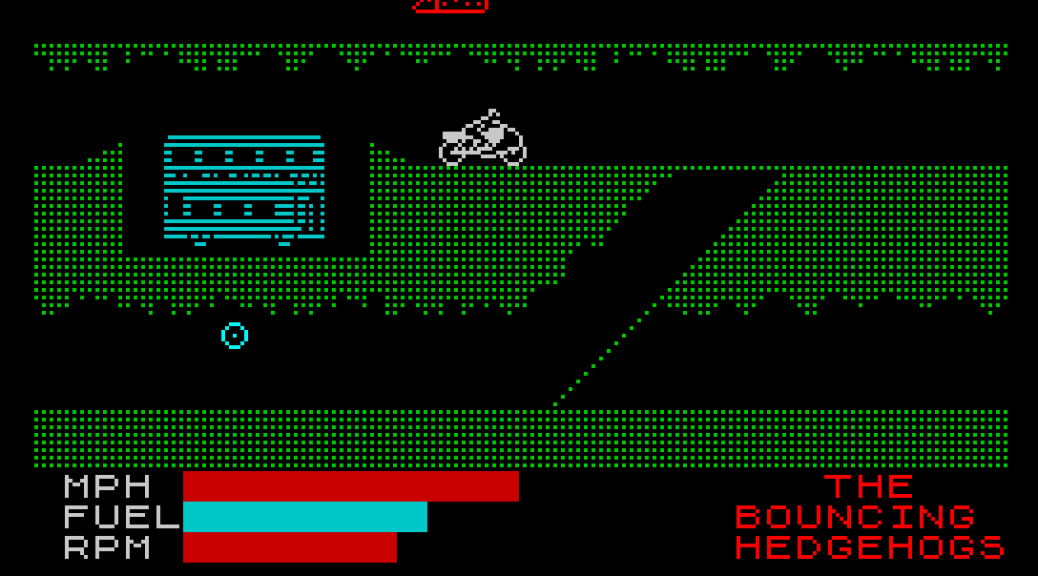
Wheelie, ZX Spectrum
Who programmed Wheelie? That’s a question I’d like an answer to.
Having played and enjoyed this side-scrolling motorbike game back in 1983, when it was originally released by publisher Microsphere, and having played it again recently, I would like to at least mention the person who made it.
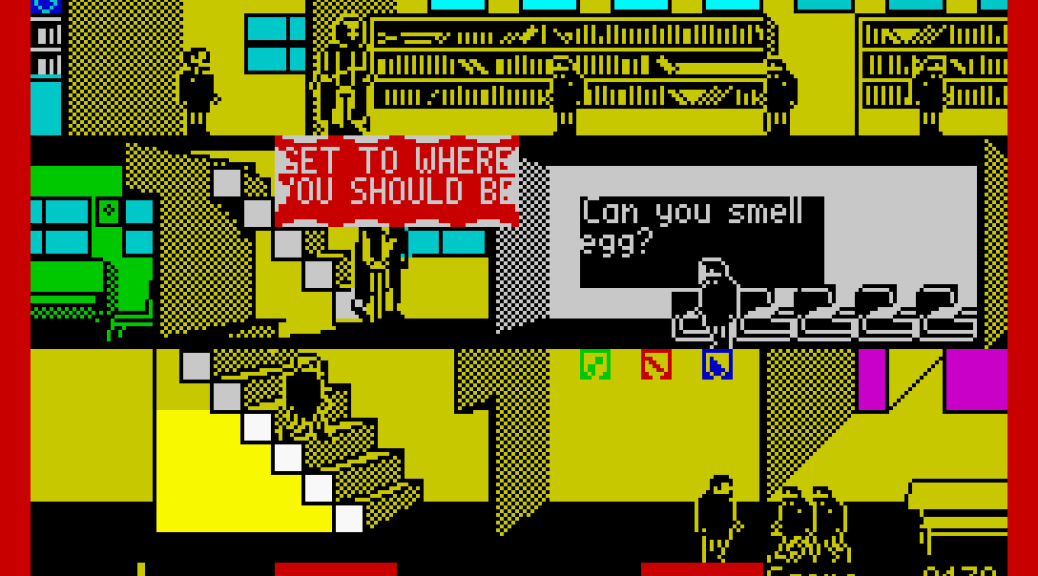
Skool Daze, ZX Spectrum
Dave Reidy, and his wife Helen (a school teacher at the time), devised and made Skool Daze for Microsphere, way back in 1984.
This memorable ‘school simulator’ was an instant hit with gamers at the time.

Roller Coaster, ZX Spectrum
First released in 1985, Roller Coaster – by S. Brocklehurst – is a fun and jaunty platform game in which you play a small, agile character who has to explore a huge theme park looking for bags of gold.

ZX Spectrum Week
The humble ZX Spectrum was first released onto an unsuspecting public in 1982 and was an instant hit with gamers.
It initially came in two varieties – 16K and 48K RAM versions – and had a curious rubber keyboard and a built-in sound speaker.
In spite of that it managed to dominate the UK (and arguably European) gaming scene throughout the 1980s and also inspire a generation of computer users and game designers (some of whom still make games for it to this day).
Later versions of the ZX Spectrum had better keyboards and more memory, but the games were still unique and distinguishable.
This week I’ll be dedicating this blog to classic ZX Spectrum games and will be featuring some of my favourites in this ever-expanding gallery of grabs. Hope you enjoy!
Here are links to what was published:
Roller Coaster,
Skool Daze,
Wheelie,
Stop The Express,
Zynaps,
Trashman,
Auf Wiedersehen Monty,
Wizard’s Lair,
Dark Side,
Starstrike 3D,
Starstrike II,
Nosteratu the Vampyre,
Sir Fred,
Lords of Midnight,
Doomdark’s Revenge,
Starquake
More: ZX Spectrum on Wikipedia
See also: 100 Best ZX Spectrum Loading Screens:
Part #1, Part #2, Part #3, Part #4, Part #5

48K ZX Spectrum

ZX Spectrum Internals

Android 2, ZX Spectrum
Android 2 is a great little maze shooter for the 48K Spectrum, designed and programmed by Salford University graduate Costa Panayi and published by Vortex Software in 1983.

Android 1: The Reactor Run, ZX Spectrum
Costa Panayi‘s 1983 release, Android 1: The Reactor Run, definitely showed the potential of the young games designer, even if the game overall is a little too short.

Laser Squad, ZX Spectrum
Another Julian Gollop classic – Laser Squad was one of the earliest squad-based tactical combat video games, released in 1988, and was originally developed for the ZX Spectrum (and later converted to various other systems).
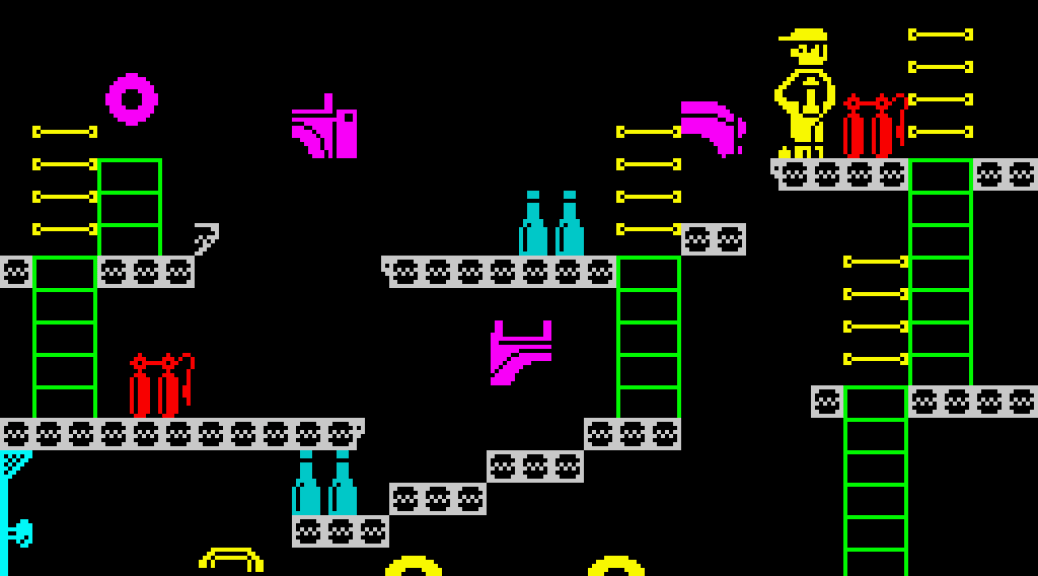
Automania, ZX Spectrum
Automania – developed by Chris Hinsley for Mikro-Gen in 1984 – is the first ever appearance of the character Wally Week.

Match Point, ZX Spectrum
Way back to 1984 and tennis on the ZX Spectrum.
Match Point, by Psion, was about as good as computer tennis got in the early Eighties.
 The King of Grabs