
The ZX Spectrum version of Elite was developed by Torus and published by Firebird in 1985. There were 48K and 128K versions made available and both are excellent.
Tag Archives: Space Combat

Elite, Commodore 64
Elite on the Commodore 64 is slow and flickery (just like the BBC original in fact) but at its core is a fantastic game that refuses to be ruined by the C64‘s limitations.

Eye of the Storm, PC
Eye of the Storm was the first game released by Rebellion Developments in 1993, and also the first video game designed by Jason Kingsley, co-founder of Rebellion and current owner of 2000AD comic.

Tau Ceti, Amstrad CPC
I wrote quite a bit about the original ZX Spectrum version – because it’s so good – but this 1986 Amstrad version of Tau Ceti is possibly even better than the original…

Tau Ceti: Special Edition, ZX Spectrum
Tau Ceti: Special Edition is an updated, enhanced version of the original game, released for 128K Spectrums in 1987.
The Special Edition contains a number of new features that make playing Tau Ceti easier and more well-rounded.
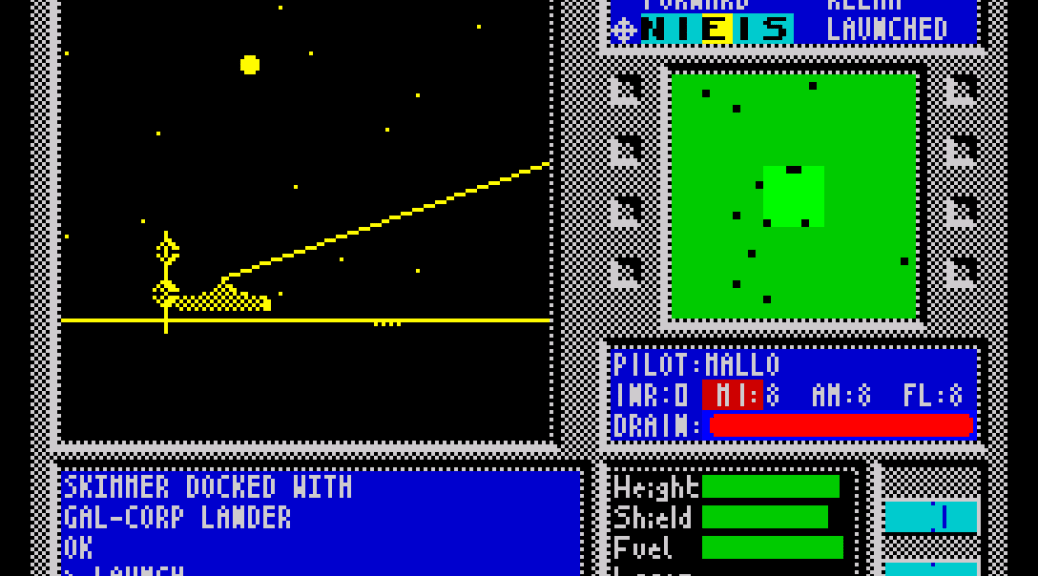
Tau Ceti, ZX Spectrum
Published by CRL Group in 1985, Tau Ceti was programmer Pete Cooke‘s breakthrough game. ‘Breakthrough’ in that it was just completely brilliant and ahead of its time, and ultimately: influential.

Elite, BBC Micro
The classic Elite originated on the BBC Micro. David Braben and Ian Bell‘s classic space combat/trading game was first released by Acornsoft in 1984.
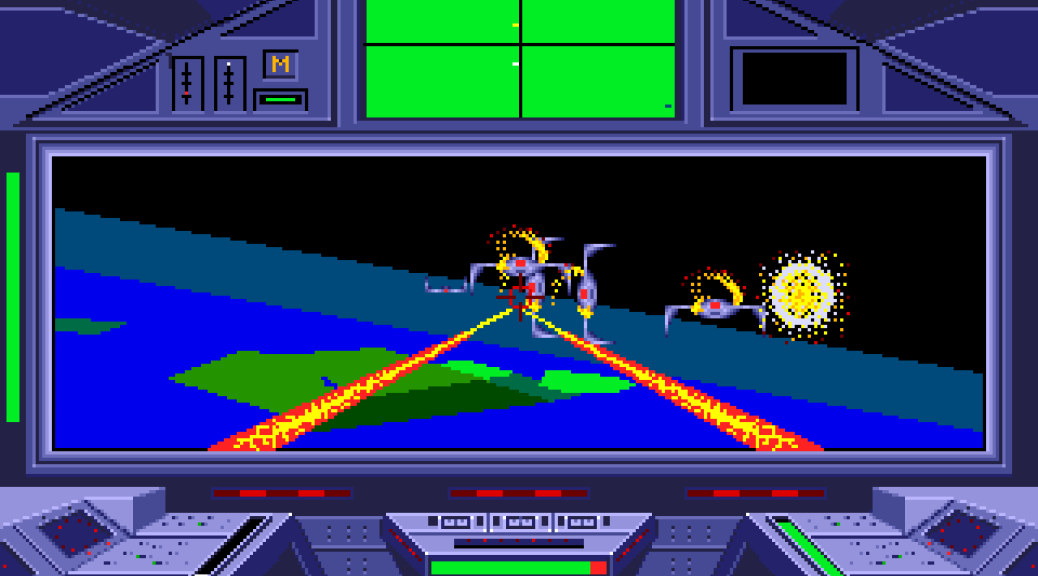
S.D.I., Amiga
S.D.I. (Strategic Defence Initiative) is a 1986 release from legendary American games company Cinemaware.
Set in a Cold War type scenario, S.D.I. pits East against West in a fight for dominance in space.

Star Raiders II, Atari 8-bit
Released by Atari in 1986, Star Raiders II was initially designed as a video game based on the film The Last Starfighter. When that idea was eventually dropped the game was re-modelled into Star Raiders II.

Rescue On Fractalus, Atari 8-bit
The Atari 800 version of Rescue On Fractalus was released in 1984 and was the first version available. It was a critical success and drew quite a lot of attention to Atari 8-bit home computers (jealous Commodore 64 owners had to wait almost a year before they got a conversion).
 The King of Grabs