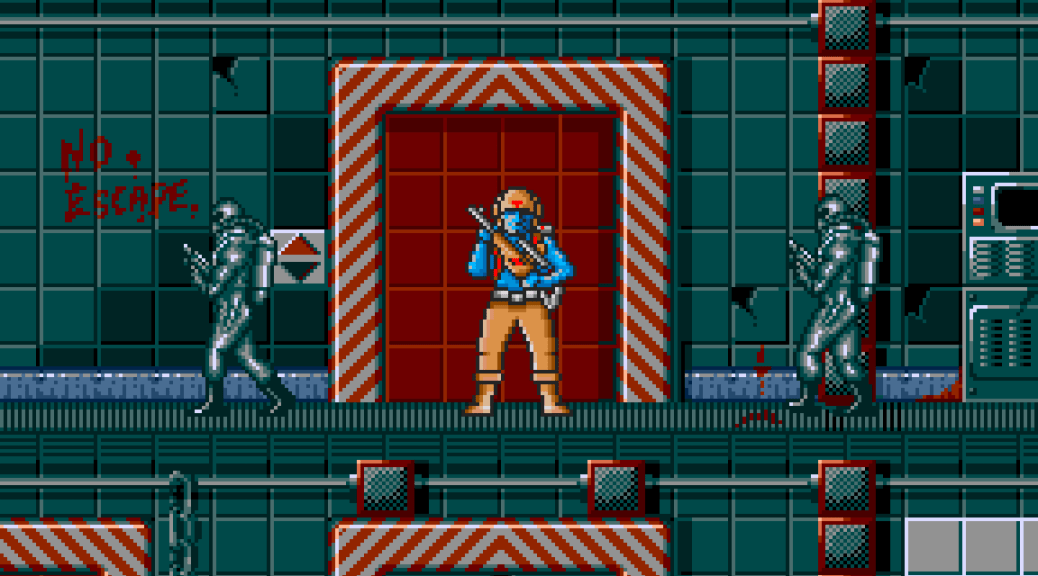
This adaptation of 2000AD‘s famous comic character, Rogue Trooper, was developed and published by Krisalis Software for the Amiga and Atari ST in 1990, and it’s a reasonable attempt at bringing the blue-skinned super soldier’s stories to life in a video game.
Tag Archives: 2D graphics
Flat, two-dimensional graphics, usually constructed of pixels. Not three-dimensional.

Judge Dredd, Commodore 64
The second Judge Dredd game on the Commodore 64 was developed by Random Access and published by Virgin Games in 1991, and while it’s better than the crappy 1986 Judge Dredd game from Melbourne House, it’s still not very good.
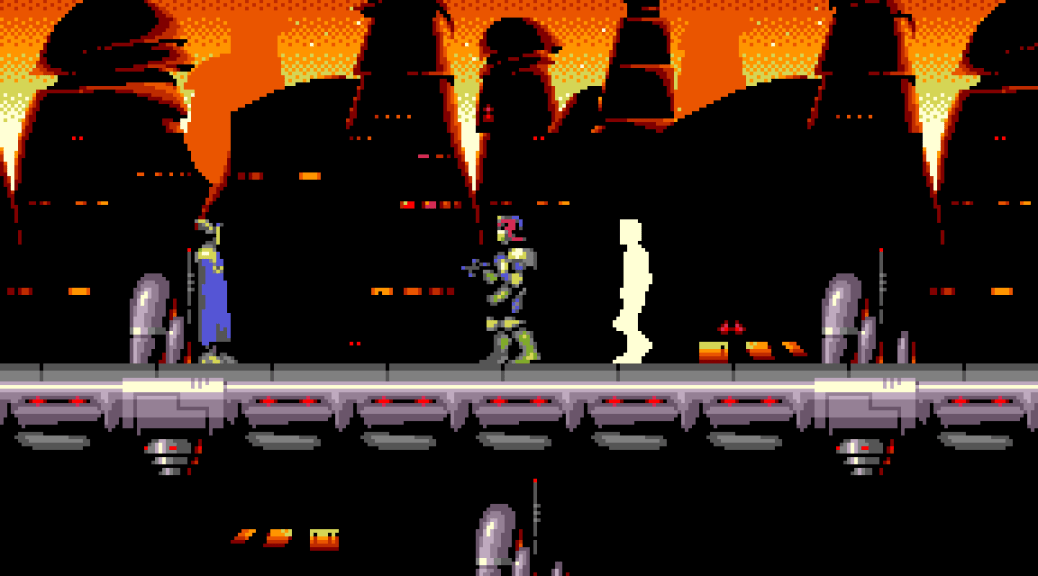
Judge Dredd, Amiga
The 1990 version of Judge Dredd, developed by Random Access and published by Virgin Games, is a frustrating and barely playable platform action game that is hamstrung by restrictive game mechanics.
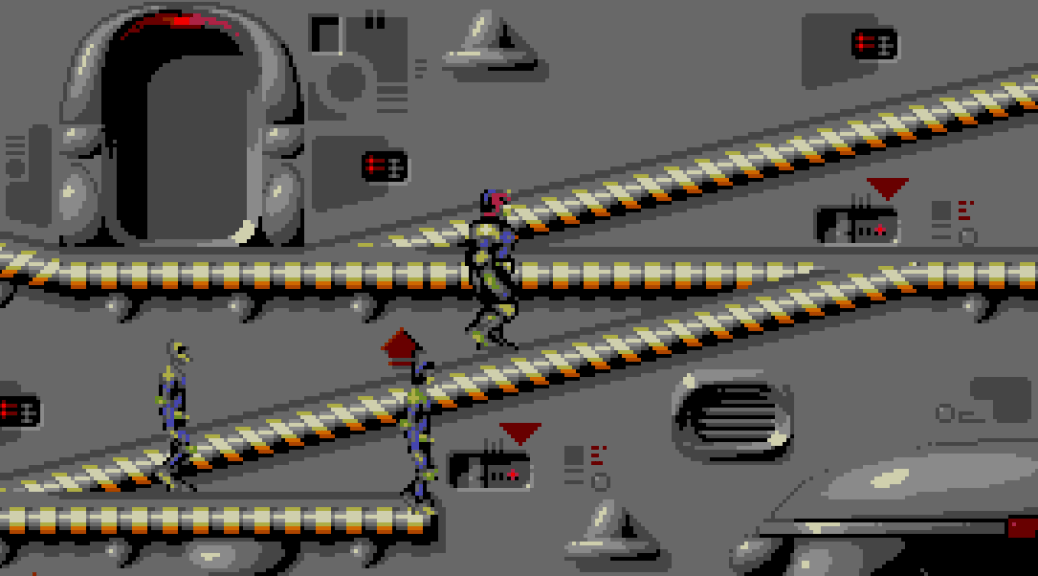
Judge Dredd, Atari ST
The Atari ST version of the 1990 Judge Dredd game from Virgin Games is pretty much identical to the Amiga version – and the 8-bit versions – which means that it’s another failed attempt to bring the famous 2000AD comic character to life in a video game.

Judge Dredd, ZX Spectrum
This second attempt at a Judge Dredd game on the Spectrum was developed by Random Access (the development team at The Sales Curve) and published by Virgin Games in 1990, although there is some debate about how widespread the game’s release actually was.
Was the game even properly released, or was it cancelled and some copies leaked out? Few people seem to have had a copy and it only recently turned up on game preservation sites. There were reviews in most of the major magazines at the time, although this doesn’t indicate whether the game was released or not.

Nemesis the Warlock, Amstrad CPC
Creative Reality developed and Martech published this adaptation of the famous 2000AD comic character, Nemesis the Warlock, in 1987. It is a simple platform action game where the aim is to kill as many Terminators as possible in order to open up the exit to the next level.

Nemesis the Warlock, ZX Spectrum
The ZX Spectrum version of Nemesis the Warlock was developed by Creative Reality and published by Martech in 1987. And it is another relatively poor adaptation of a classic 2000AD comic character.

Nemesis the Warlock, Commodore 64
Nemesis the Warlock was developed by Creative Reality and first released by Martech in 1987. It is based on the 2000AD comic character of the same name, although the connection is tentative to say the least.

Sláine, Amstrad CPC
Developed by Creative Reality and published by Martech in 1987, Sláine is another attempt to bring a popular 2000AD comic character to life in a video game, and it is unfortunately another failed experiment.
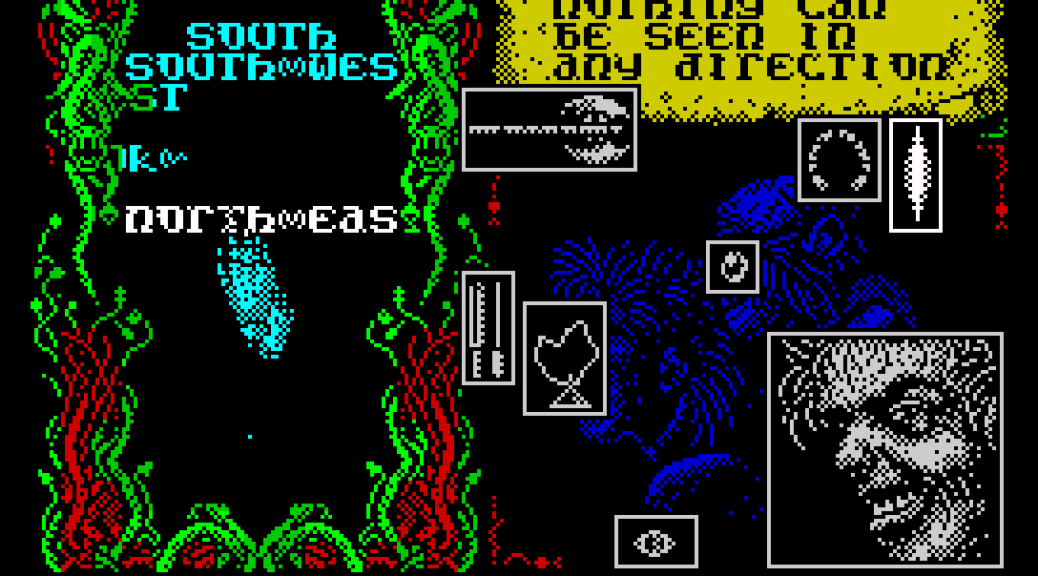
Sláine, ZX Spectrum
Based on the 2000AD comic character of the same name, Sláine is an interactive action adventure game developed by Creative Reality and published by Martech in 1987.
 The King of Grabs