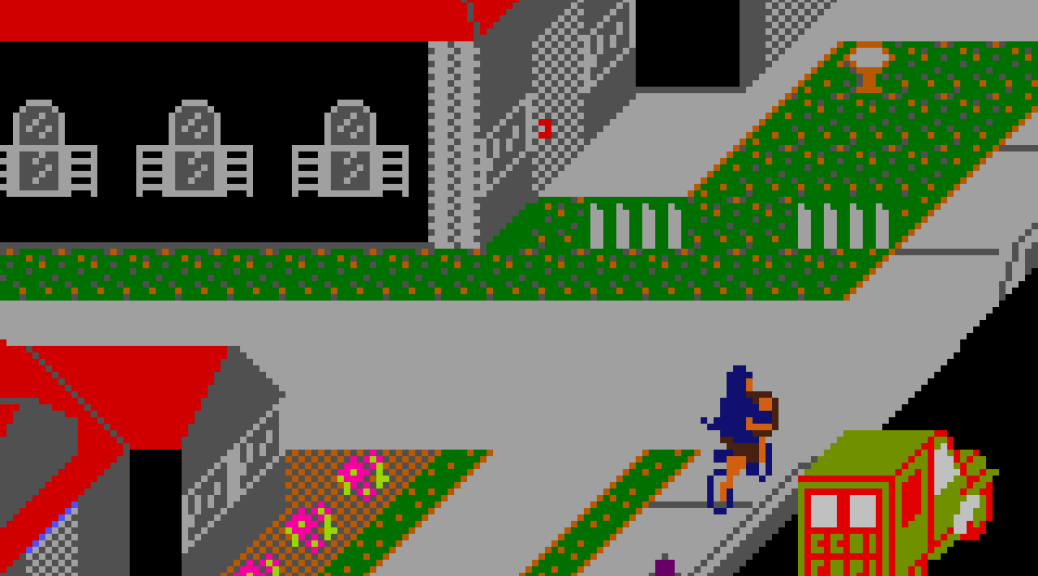
The Game Boy Color version of Paperboy was converted by Digital Eclipse and published by Midway Games in 1999, and it is a playable, enjoyable version of the game.
Tag Archives: isometric

Paperboy, Megadrive/Genesis
The Megadrive/Genesis port of the classic Paperboy arcade game is probably the best conversion of the game available. Outside of the arcade original – or anything else that can emulate it perfectly – the Megadrive version comes a close second. Paperboy was first released for the Megadrive/Genesis by Tengen in 1991 and was ported by British company Motivetime Ltd.

Paperboy, Game Gear
The 1991 Game Gear version of Paperboy looks and plays somewhat similar to the Sega Master System version, which is no bad thing because the Master System version is one of the best conversions of Paperboy around.

Paperboy, Atari Lynx
The 1990 Atari Lynx version of Paperboy is pretty good in terms of looks and gameplay. It’s not perfect, but the small screen doesn’t hurt the game too badly. When blown-up the screenshots look a bit indistinct, but during play the visuals work fine.

Paperboy, Game Boy
There was a release of Paperboy for the original Game Boy in 1990, plus it was also released for the Game Boy Color in 1999.

Paperboy, Sega Master System
The 1990 Sega Master System version of Paperboy was developed by Tiertex and is definitely one of the best versions of Paperboy around.
Paperboy, Amiga
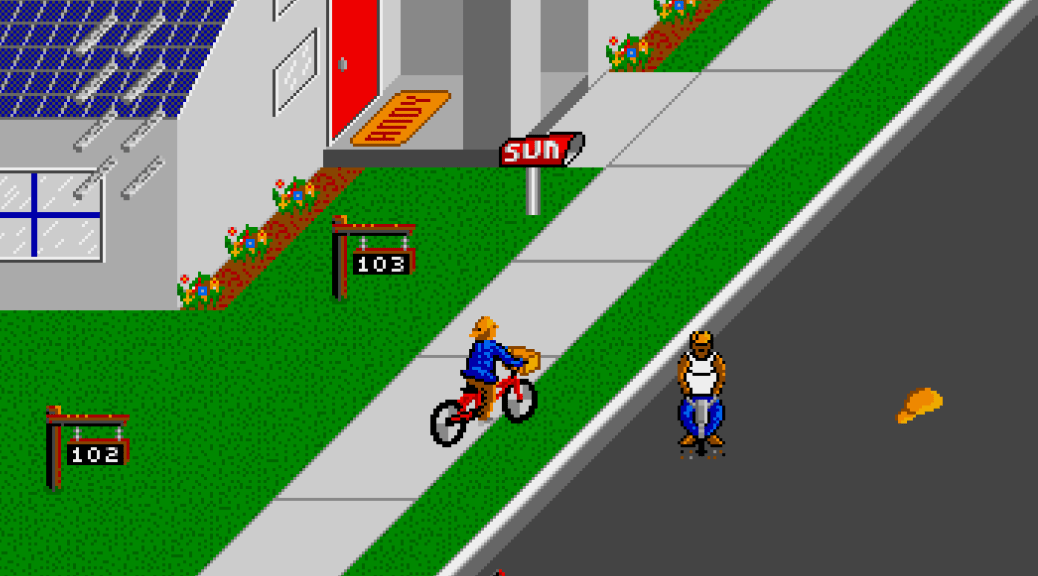
The 1989 Amiga conversion of Paperboy is better than the Atari ST version of the game, in my humble opinion. The main reason being that it uses most of the screen and thus gives the game a more authentic feel.

Paperboy, Atari ST
The 1989 Atari ST conversion of Paperboy is playable, but is less than adequate in terms of authenticity and longevity, in my humble opinion.
Paperboy, NES/Famicom
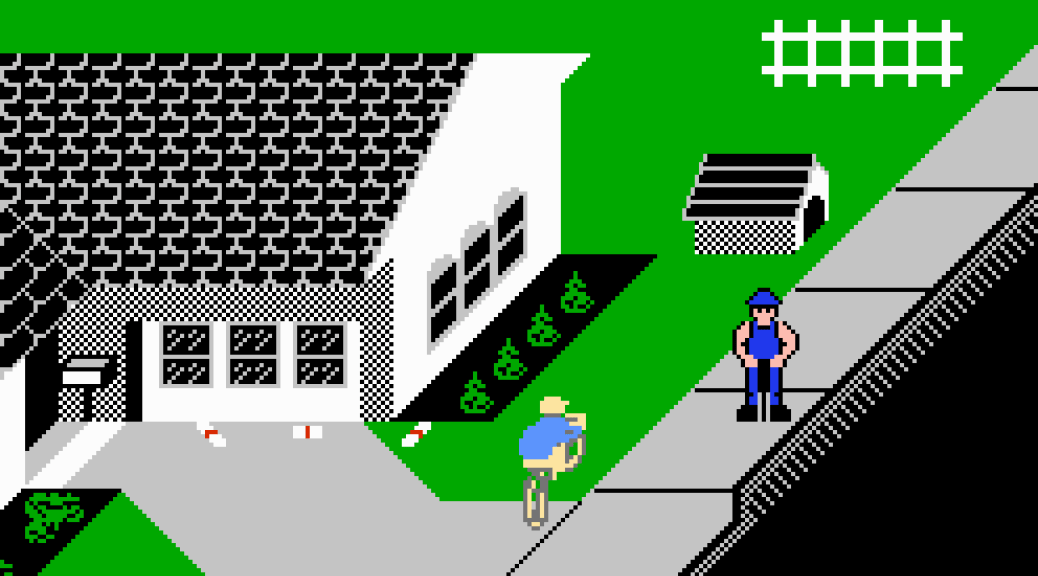
The Nintendo Entertainment System port of Paperboy was developed by Tengen and published by Mindscape in 1988. And it is not a bad conversion, all told. That said: it’s nothing special either. It’s certainly not as good as the excellent Master System version, which was its main competitor in its generation.

Paperboy, Apple II
The Apple II version of Paperboy was published by Mindscape in 1988 and unfortunately it is a slow, garish mess that is barely playable, although it’s not a complete disaster…

