
Novagen released the Atari ST version of Encounter in 1991.
Tag Archives: First-Person
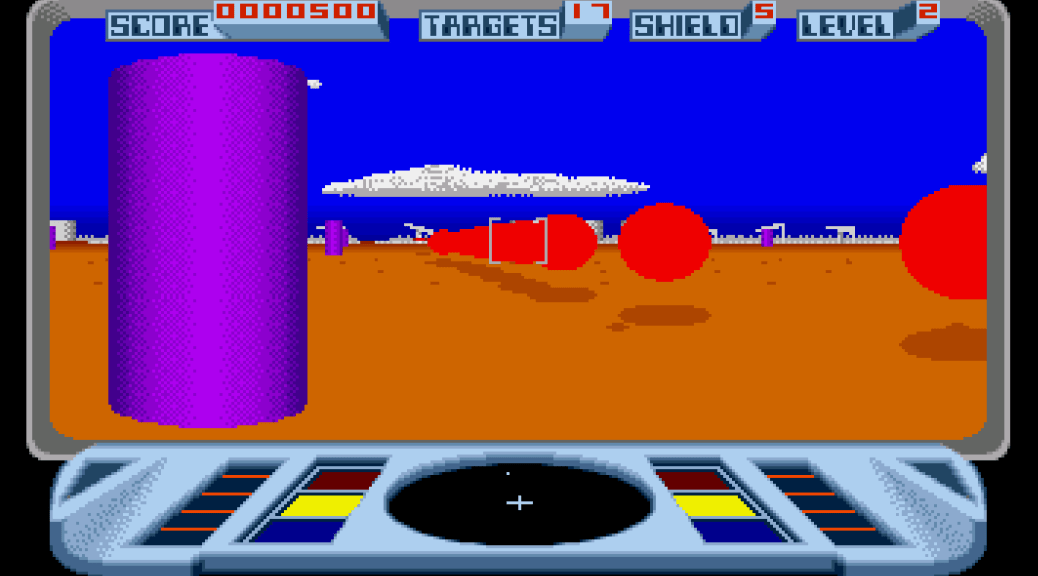
Encounter, Amiga
The Amiga version of Encounter was first released in 1991 (a full seven years after the original release) by Novagen Software.
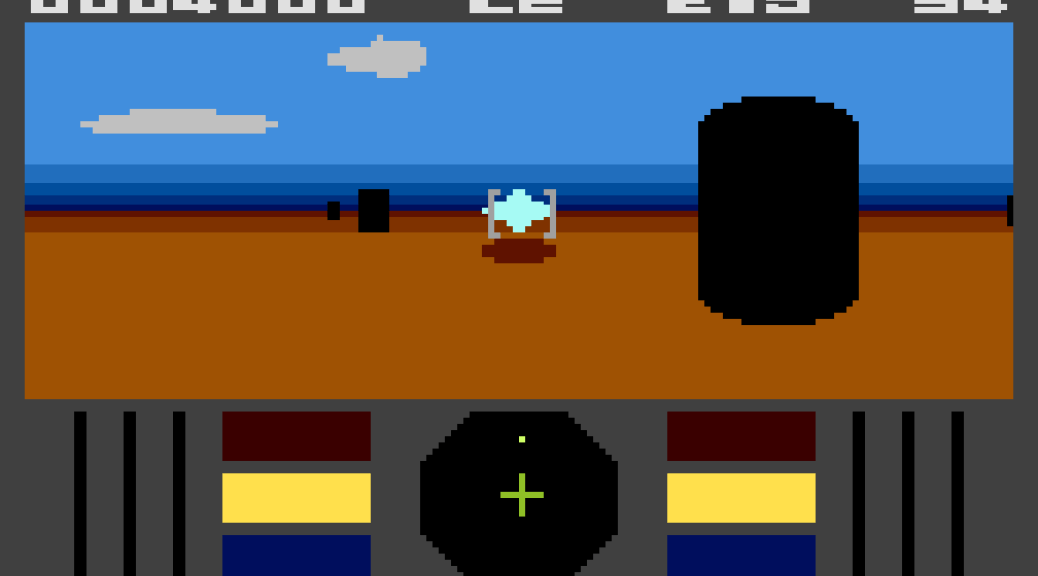
Encounter, Atari 8-bit
Paul Woakes‘ classic first-person ‘tank’ shooter Encounter was released simultaneously on the Atari 800 and C64 in 1983.
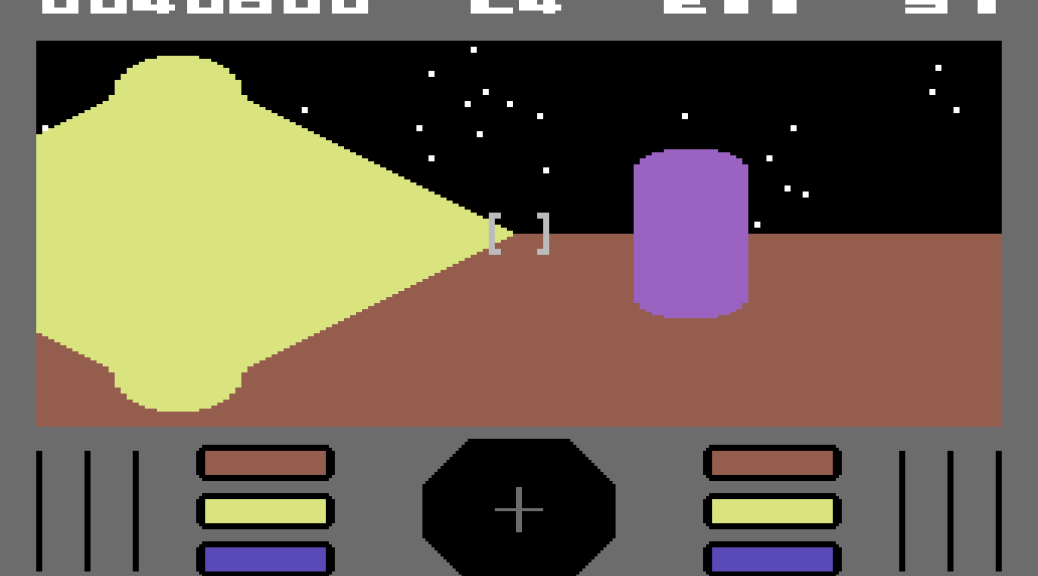
Encounter, Commodore 64
Paul Woakes‘ classic first-person shooter on the Commodore 64, Encounter, wowed gamers back in 1983 when it was first released.

Backlash, Amiga

3D Monster Maze, ZX81
3D Monster Maze was developed by Malcolm Evans for J.K. Greye Software in 1982.
This classic black and white maze game was one of the first ever video games to use a first-person viewpoint inside a 3D maze.

Driller, Commodore 64
The Commodore 64 version of Incentive‘s classic Driller is surprisingly good, considering that the machine isn’t particularly suited to this kind of game.

Driller, PC
American publisher Epyx released UK hit game Driller onto US PC markets under the title of Space Station Oblivion in 1988.
There was no need for a title change really. Driller says it all.

Driller, Atari ST
Driller and Freescape started life on the ZX Spectrum in 1987 – performing miracles on Sir Clive’s humble little machine. Creating 3D worlds where previously there were none…
And, being more than just a graphics engine, Freescape (and Driller) lived on into the 16-bit realm, and beyond.

Driller, ZX Spectrum
Driller first appeared on the ZX Spectrum in 1987. This version is where it all began.
Driller‘s engine – called Freescape – was to go down in history as one of the first to make 3D gaming a real possibility.
 The King of Grabs