
Another Retrospec remake of a classic Ultimate game. This time: Lunar Jetman. This one was released in 2002 and unfortunately is another flawed piece of software.
Tag Archives: scrolling

Tranz Am Retrospec Remake, PC
This PC remake of the classic ZX Spectrum game, Tranz Am, was first released in 2008 by Retrospec. It is a reasonably faithful, “enhanced” conversion of the overhead racing game originally published by Ultimate Play the Game in 1983.

Martianoids, MSX
Martianoids was released in 1987 on three different formats: ZX Spectrum, Amstrad CPC, and this MSX conversion. All three are pretty much identical in terms of gameplay; they feature a robot, walking through nine sectors of a scrolling landscape, fighting off alien robots that are trying to destroy a computer you are defending.
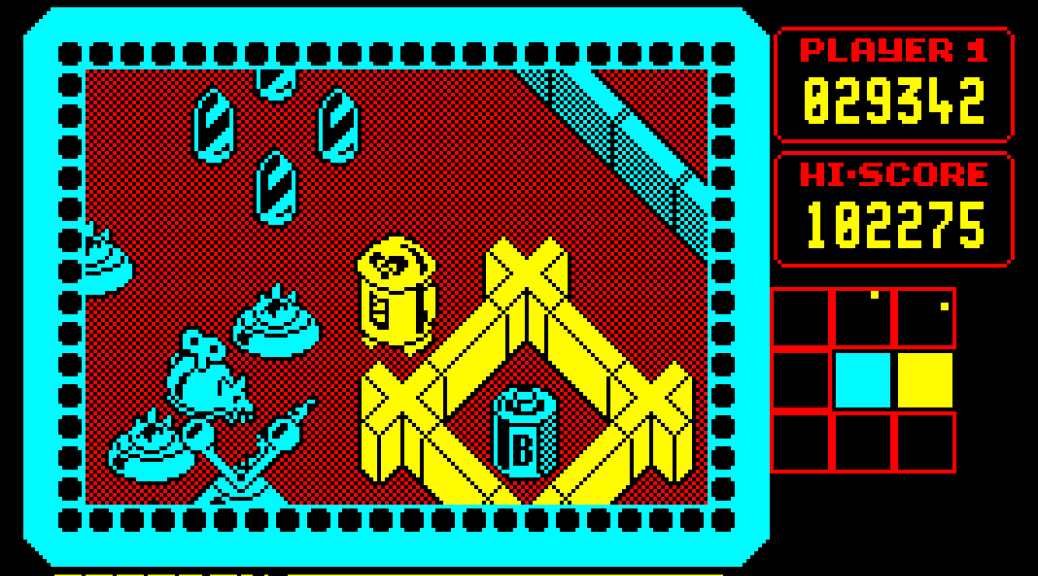
Martianoids, Amstrad CPC
The Amstrad CPC version of Martianoids is arguably slightly better than the ZX Spectrum version, because it has a couple more on-screen colours to play around with. It plays the same as the Spectrum version, but looks a little better. The scrolling and control responsiveness seem a little slower, though.

Martianoids, ZX Spectrum
Ultimate Play the Game‘s 1987 release, Martianoids, is another US Gold attempt to recreate the thrills and spills of a genuine Ultimate game and failing miserably.
You can find some indication of this if you type “Martianoids longplay” into YouTube and seeing that there aren’t any videos. Almost every other Spectrum game has someone playing through it on YouTube; definitely every other Ultimate game, but not this one.

Bubbler, Commodore 64
***CANNED GAME***
There is a story behind the Commodore 64 conversion of Bubbler, but to condense it into just a few sentences: the game was being converted in 1987 by an intermediary company for Ultimate, called Lynsoft, but was canned before release because it wasn’t fast enough.
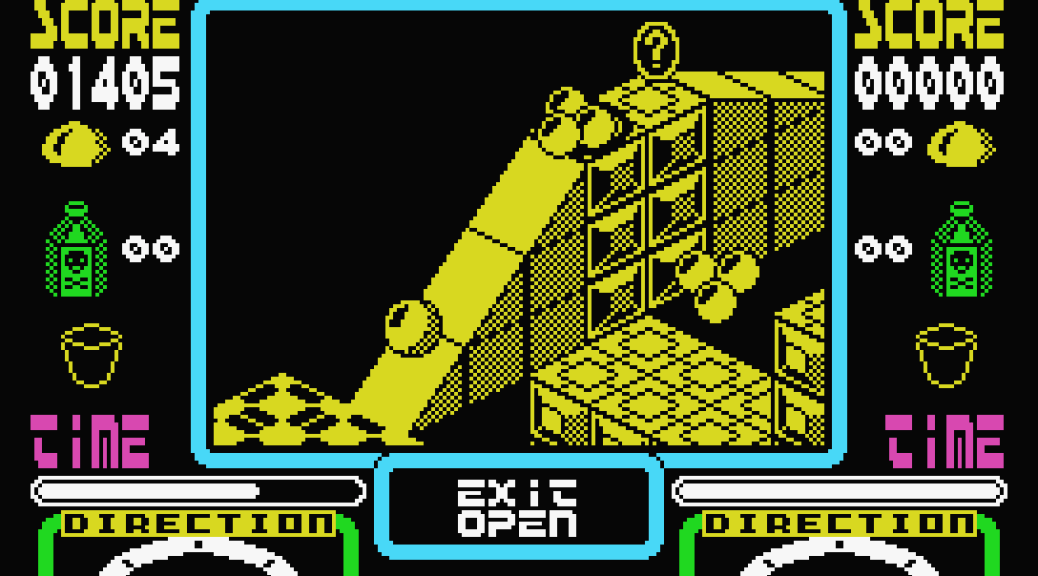
Bubbler, MSX
The 1987 MSX conversion of Bubbler is arguably better than the Spectrum original because the speed is more consistent during play, which makes it more playable. In fact, it’s a game that borders on being superb, which is unusual for the later US Gold/Ultimate games which are generally considered to be inferior to Ultimate‘s earlier titles.

Bubbler, Amstrad CPC
The Amstrad version of Ultimate Play the Game‘s Bubbler benefits from some extra colour, but plays pretty much the same as the ZX Spectrum original (ie. it’s playable, but insanely difficult).

Bubbler, ZX Spectrum
Bubbler is an isometric action game that was published in 1987 under the Ultimate Play the Game banner, but in reality is a US Gold game that wasn’t developed by the original Ultimate team. And it is an insanely difficult, but playable, game.
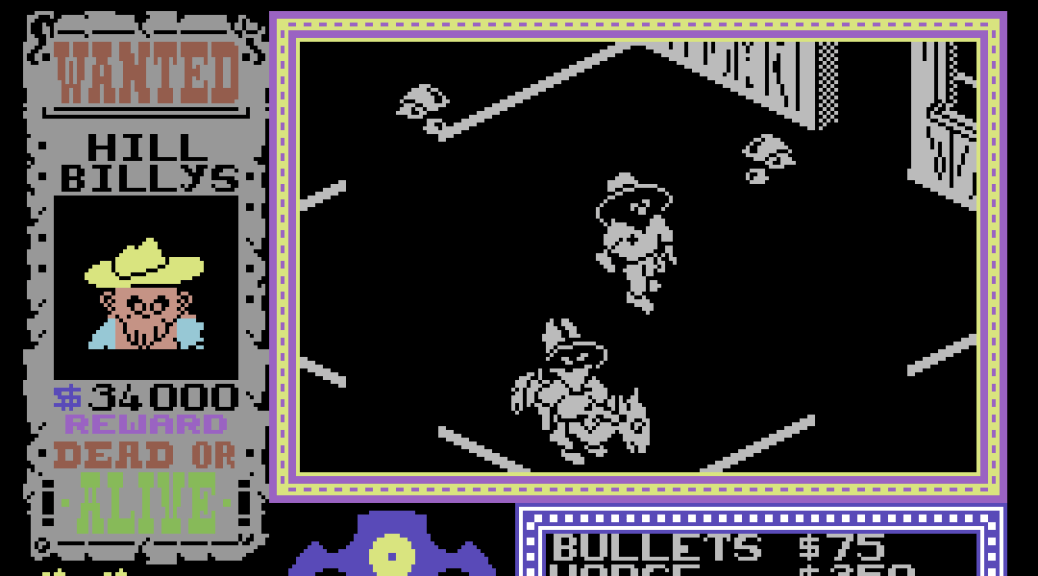
Gunfright, Commodore 64
This C64 homebrew conversion of Ultimate‘s 1986 ZX Spectrum hit Gunfright was developed by Rod & Emu and released in 2017, and it’s another decent modern port of a thirty year-old game.
 The King of Grabs