Based on the 1988 Ron Howard film of the same name, Willow is an adventure/RPG that was developed and published by Capcom in 1989. It has nothing in common with the arcade game, called Willow, which was released by Capcom the same year.
At the time of its original release, the game received mixed reviews, although Willow is now seen by many as one of the better adventure/RPGs on the NES. Looking at it: you wouldn’t have thought so, but the game is actually quite addictive when you get into it.
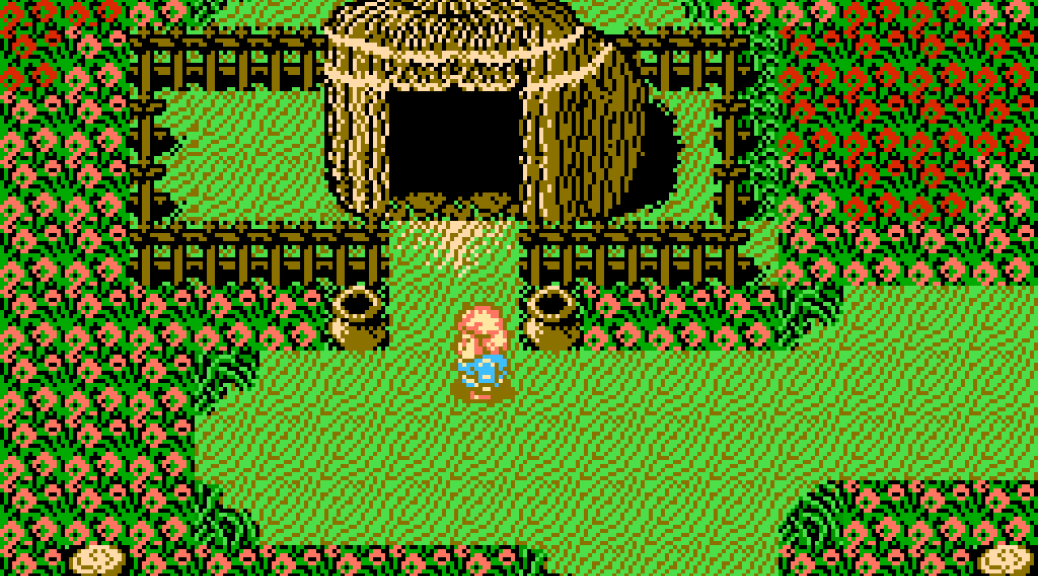
Graphically, Willow is fairly basic, with limited colours in the backgrounds, but everything is quite well-drawn, and the presentation is good overall. The music is excellent, with catchy JRPG-style tunes that don’t wear thin quickly. Most importantly, the gameplay is engaging and absorbing, in a Zelda-like fashion, with Willow acquiring a sword early in the game and swinging it around much like Link.
Visiting houses introduces you to characters who will give you information, items, or even side quests. In the wilds (ie. when not in a friendly settlement), there’s a chance of random encounters with monsters or beasts, and these will appear when you enter a certain area on the screen. Which means that you can suddenly find yourself surrounded by enemies at any moment.
It takes a while to master using the sword, so wildly swinging it around non-stop is not a good idea. Careful swipes are needed at first, otherwise you can find yourself dead from no HP. After levelling up a few times, your sword skills will improve, and you’ll be able to swing it faster and more capably. Willow can also shoot magic acorns, but these use up MP so must be used sparingly. At least until your MP reserves have grown.
If your health is getting low, you can either try to find a healer, or you can wait for a defeated enemy to drop a health replenishment power-up (not ideal since they’re quite rare). You’re also given items that can heal you (like the Heal Mace), later in the game.
Most of the puzzles in Willow are based on finding certain items in the maze of screens, and using them to either get past something blocking your way, or exchanging them with a character for something else.
Willow has a password system for continuing your games, so no battery backup saves unfortunately, but in the age of emulators most players will probably be using quicksaves, so that’s a moot point.
I think the reason Willow on the NES/Famicom has stood the test of time well is because it’s a Japanese game, and it definitely has a JRPG flavour to it. If it’d been developed in the West I’m pretty sure that it would have been bland and would be long forgotten by now, but old JRPGs seem to have a timeless quality to them – at least, the better ones do.
Although Willow doesn’t look like much, and the film isn’t particularly great (although I must admit, I’ve not seen it for a few decades), this game is still worth playing today. It actually surprised me, how much I enjoyed it.
More: Willow (NES) on Wikipedia


 The King of Grabs