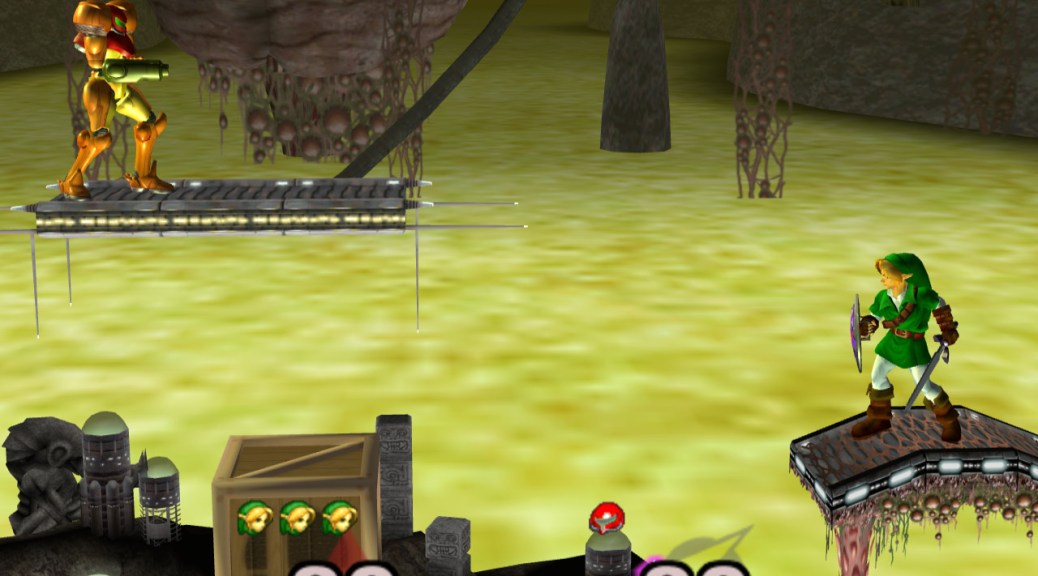
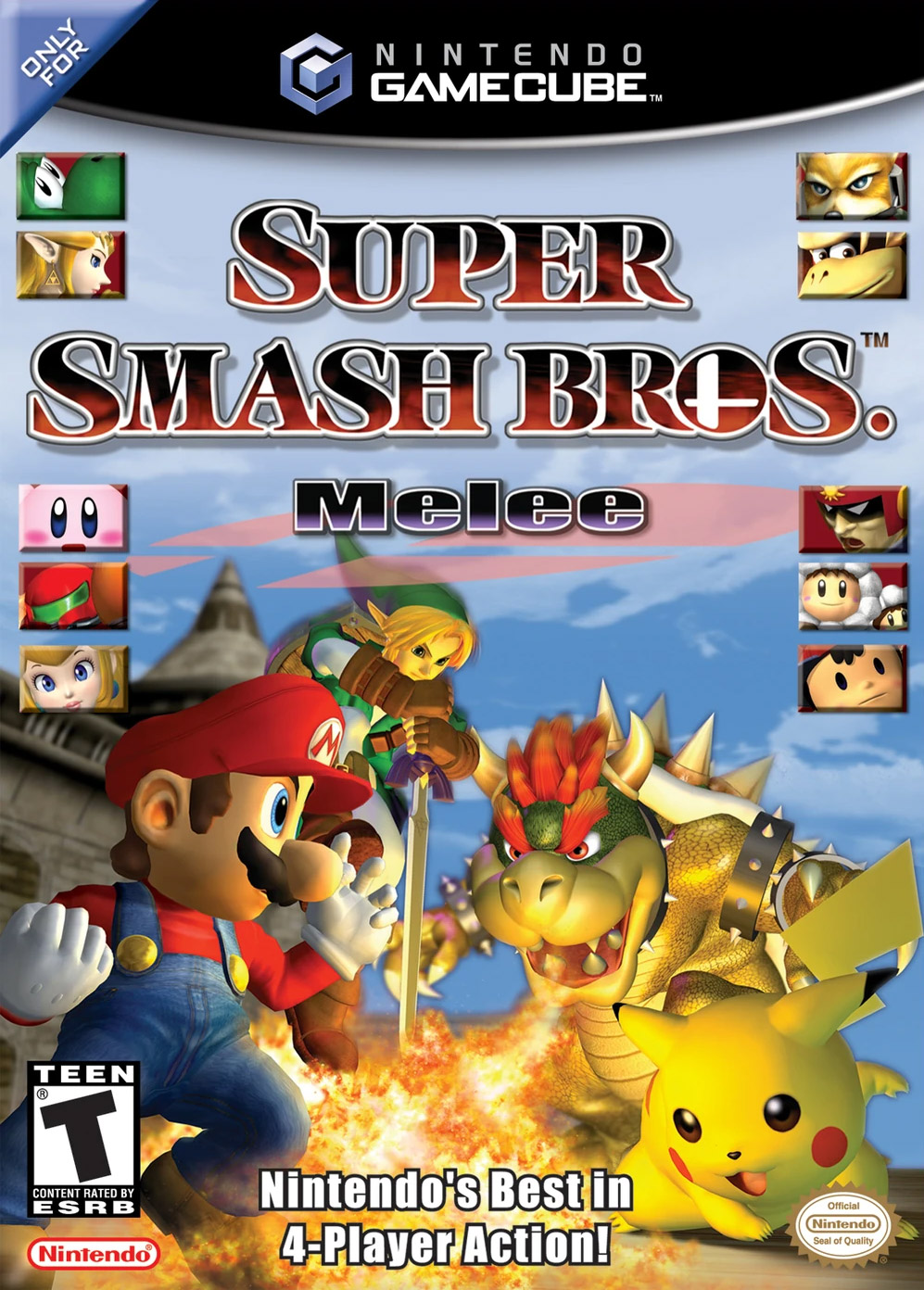
Super Smash Bros. Melee is a classic GameCube-exclusive fighting game, developed by HAL Laboratory and published by Nintendo in 2001. It is the sequel to HAL‘s 1999 Nintendo 64 game, Super Smash Bros. It features an array of historical Nintendo characters, taken from a range of classic Nintendo games, and it pits them against each other in a dynamic fighting arena.
Available characters include: Mario, Samus, Link, Zelda, Donkey Kong, Princess Peach, Kirby, Yoshi, Pikachu, Fox McCloud, Ness from Earthbound, Luigi, and more. Each have their own strengths and weaknesses, and it’s up to you to discover what they’re like and how they play, and to unlock the hidden characters and extras.
All regular single-player games can be played in Classic or Adventure mode. Classic means that you’ve got to defeat each opponent to advance. Adventure means that you’ve got to battle through various stages to win.
During combat, pushing up on the control stick makes your combatant jump, although you can also set jump to a button of your choice if you prefer. The camera zooms out when the fighters get farther away from each other, and zooms-in the nearer to each other they get. This gives the fighting arena a dynamic look and feel and defines Super Smash Bros. Melee. At least visually. And everyone copied it after HAL popularised it.
In standard Super Smash Bros. Melee games, you can only win by knocking your opponents off the landscape, before they can do the same to you. Points are awarded, and any new records displayed between stages, and an on-screen breakdown of progressing fight data is shown during combat.
There’s a training mode; where you can set your opponent to react differently to your attacks (stand; walk; jump; evade; attack; run away) while you practise your moves on them. You can have up to three opponents fighting against you at once. You can set a damage multiplier to your AI opponents, so that they hurt you more. Or you can train with a human opponent.
Fighter movement in Super Smash Bros. Melee does take some getting used to. It’s easy to overshoot an intended position by spamming left or right too much. You have to find a rhythm with your movement timings, and the game’s inertia, in order to put yourself within striking distance of an opponent. And you must do this repeatedly, without falling into any insta-death holes…
Each character also has access to a special defensive shield move, which can block most attacks if timed right. You can’t attack while the shield is up, though.
Event Matches are great fun. You’re given a variety of minigames to complete at differing levels. The higher the level, the more difficult the minigame. Completing Events awards you points and trophies.
You have to watch out because the landscape can screw you over in some levels. Lava occasionally rises and falls, so you have to jump to higher platforms to avoid taking damage. The key with this kind of event is to figure out their visual cues, warning you that they’re coming. Some levels scroll vertically, continuously, and if you fall off the bottom and can’t keep up, you’ll lose a life.
Stadium Mode is the place to play Super Smash Bros. minigames. Target test (“Smash ten targets!“), Home-Run Contest (“Smash a sandbag as far as you can!“), and Multi-Man Melee (“Fight for your Life! Fight!“) are available from the start, and you can unlock more as you progress.
Super Smash Bros. Melee is a ton of fun for fighting game fans. It is high-tempo and frenetic at times, and has some memorable moments (the boss battle against the giant floating glove being just one of them).
Shigeru Miyamoto is credited as a producer in the credits, and the game bears many of his hallmarks.
More: Super Smash Bros. Melee on Wikipedia


 The King of Grabs
One thought on “Super Smash Bros. Melee, GameCube”